Friday, April 24, 2009

Schools projects

Biofuels

Our work with biofuels has four main aims:

  • Finding clean, renewable fuels for our vehicles;
  • Helping to find ways to clean up the air in polluted cities;
  • As an environmental project for schools participating in Journey to Forever;
  • As a means of improving energy self-reliance in rural communities.


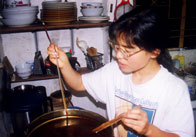
Making biodiesel in the kitchen.
Biodiesel and ethanol are clean, grow-your-own fuels made from plants, and they can be made in small villages, in a kitchen, or in a school laboratory. The wonderful thing about these fuels is that the by-products can still be used as food products, so no one has to starve because we're making fuel instead of food. We'd be making both!
Biodiesel

-- how to make the school bus exhaust smell like French fries

Cities are choking on air-pollution, and one of the main culprits is the exhaust smoke from diesel engines.

But diesels are the most economical engines by far, and transport industries rely on them. Scrapping diesels would raise the costs of just about everything and make everyone's life tougher.

There is one solution which could bring immediate benefits -- biodiesel. Biodiesel is a clean, environmentally friendly diesel fuel, "more biodegradable than sugar, less toxic than table salt".

We make our own biodiesel -- out of used cooking oil! You can make it too, in the school laboratory. See:

Make your first test batch of biodiesel -- Start here, and just keep going -- what you need, what to do, how to do it, everything you need to know -- step by step instructions for making high-quality biodiesel fuel, from novice to advanced level.

Cooking oil candles
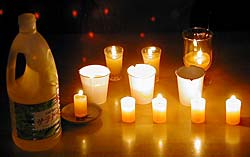


We've worked with many school teachers here in Japan wanting to include biodiesel in their lessons. We did a biodiesel project with the science teacher at our local village school here in Tamba. The kids brought used cooking oil ("tempura oil") from their kitchens at home. We collected it the day before and titrated each batch (all had low titration levels -- healthy kitchens!). We divided the oil into three batches.
The next day at the school we made biodiesel with one batch, using this
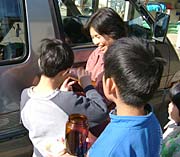
Test-batch processor. With the second batch, the children poured it straight into the fuel tank of our Toyota TownAce van (it has an Elsbett SVO system from Germany and runs on either biodiesel or straight vegetable oil or both). Then we took them for a short drive, and several teachers came along too -- they were delighted with the idea, especially the kids.
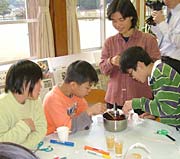
Back at the school, we made the last batch of oil into candles. There's a cheap product you can buy here in a supermarket, a white powder made from 100% castor oil which you add to your used cooking oil when you're finished with it, while it's still hot, stir it up and it sets into a solid gel which you can add to the burnable garbage bin rather than throwing it down the drain or the toilet. The powder is Castor wax (Hydrogenated Castor Oil or "Trihydroxystearin").

The gel also makes good candles -- they're easy to make and they burn well, without any odour (it needs three strings for the wick, one doesn't work so well). Another good lesson: the kids took their waste oil candles back home again and burned them with their families on Candle Night at the winter solstice:
http://www.candle-night.org/

Teachers can easily develop their own lesson plans from the tried-and-true methods in our Biodiesel section -- start here:
"Where do I start?"

Tiny diesel engines


Enya's famous .15 series diesel, from Japan
Diesel model aircraft engines range from 0.55 cc (0.033 cu in) up to about 8 cc (0.48 cu in). They fit in the palm of your hand and weigh about 250 grams (9 oz) -- great for demonstrations and student projects.
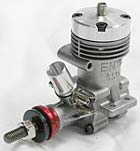
These are great little engines, beautifully engineered, true compression-ignition diesels. Some of them reach 18,000 rpm.

Most models have radio control versions (remote control, R/C).

They will run on biodiesel, but not 100% biodiesel. Their standard fuel is a mixture of 30% castor oil, 40% kerosene and 30% ether. You can substitute biodiesel for the castor oil and kerosene, but it still needs the ether -- 70% biodiesel and 30% ether.

Read more, where to buy: see Tiny diesel engines.

Other resources

Education Resources at the
US Alternative Fuels Data Center: "This site contains valuable information about alternative fuels and vehicles for teachers and students in kindergarten through 12th grade. Students in grades K through 12 can find fun activities, workbooks, and competitions that enhance their science studies. Elementary, middle school, and high school teachers will find a wide array of curriculum ideas to help their students understand the alternatives to fossil fuels and internal combustion engines."
http://www.eere.energy.gov/afdc/resources/educational_tools.html

US Energy Information Administration Kid's Page -- Biodiesel, a Renewable Fuel: Energy facts, Fun & games, Energy history, Classroom activities, features Biodiesel Made from Vegetable Oils and Animal Fats, Biodiesel as a Transportation Fuel, Biodiesel and the Environment:
http://www.eia.doe.gov/kids/energyfacts/sources/renewable/biodiesel.html
The "related links" page offers a wide variety of online energy education resources, not all in the US (beware of "greenwash")
http://www.eia.doe.gov/kids/onlineresources.html

New York's "
School Power...Naturally" program offers online lesson plans for grades 5 through 12, focuses mainly on solar PVs, but with lessons on Energy Misconceptions, Dependence on Fossil Fuels, The Carbon Cycle, The Greenhouse Effect, Biomass Energy and others.
http://www.powernaturally.org/Programs/SchoolPowerNaturally
/InTheClassroom/default.asp?i=9

Level 2 Lessons
http://www.powernaturally.org/Programs/SchoolPowerNaturally/
InTheClassroom/level2.asp?i=9

Level III Lessons
http://www.powernaturally.org/Programs/SchoolPowerNaturally/
InTheClassroom/level3.asp?i=9


Incorporating Lessons on Biodiesel into the Science Classroom, Michael S. Briggs, Joseph Pearson, Ihab H. Farag, University of New Hampshire (UNH), USA -- Presentation at the NH Science Teacher Association (NHSTA) Annual Conference, 2004 (PowerPoint file)
http://www.unh.edu/p2/biodiesel/media/NHSTA.ppt

US National Energy Education Development (NEED) Energy Infobook Activities at the Primary, Intermediate and Secondary levels, online lessons in Acrobat format -- Curriculum Guides and Activities
http://www.need.org/info_act.htm

Biodiesel resources at Journey to Forever:

Biofuels
En espaƱol -- Biocombustibles, biodiesel
Biofuels Library

Biofuels supplies and suppliers

Biodiesel
Make your own biodiesel
Mike Pelly's recipe
Two-stage biodiesel process
FOOLPROOF biodiesel process
Biodiesel processors
Biodiesel in Hong Kong
Nitrogen Oxide emissions
Glycerine
Biodiesel resources on the Web
Do diesels have a future?
Vegetable oil yields
Washing
Biodiesel and your vehicle
Food or fuel?

Biodiesel pages in Spanish

Ethanol

What about the pollution from car engines? Most cars have petrol engines (gasoline), not diesel, and they don't smoke as much, but they still pollute the air with deadly fumes.

Ethanol is a good substitute for petrol: it's a clean, high-performance fuel that cuts poisonous exhaust emissions and is much better for the environment.

Ethanol is made by fermenting and then distilling starch and sugar crops. Here's how to make it in the school lab:

"Ethanol -- As A Fuel", comprehensive study project from the Northwest Iowa Community College, including laboratory production of ethanol. Ethanol Curriculum for Teachers (Grades 9-12)
http://www.nwicc.cc.ia.us/etsp.htm

Ethanol from plants -- Ethanol Study Course, resources for teachers, from Australia's New South Wales Higher School Certificate (Stage 6) syllabus
http://www.kcpc.usyd.edu.au/discovery/9.2.3-short/syllabus.html

Ethanol Car: Building the ‘Stirly, the Little Engine that CAN’ -- Stirly was designed as an educational model to demonstrate how biomass fuels (clean and renewable fuels made from plant materials) can be used to power vehicles. It is meant to inspire people into thinking about alternatives to fossil fuel energy. It is also meant to promote a very exciting and promising sustainable technology for not only locomotion, but also heating, cooling, and power generation, namely, the Stirling engine. here's how to build a Stirly, using a tin can, a few balloons, a rubber band, a paper clip, a hoseclamp, a fondue burner, some copper wire, fishing line, bits of wood and plastic and other stuff, duct tape and Superglue.
http://www.eya.ca/mainresources/energymodels/biomass/ethanolcar.htm

Build A Tin Can Stirling Engine -- by Mr.Saburo Tsucchida of Kasukabe technical high school in Japan. Full instructions and diagrams.
http://www.bekkoame.ne.jp/~khirata/english/mk_can.htm

Energy Quiz -- from the Energy Information Administration, US Department of Energy: 15 multiple-choice questions with "Find the answer first or look at the Quick Answer List."
http://www.eia.doe.gov/kids/energyquiz.html

Fuels and Society -- General Chemistry Case Study Curriculum Supplements:
a. Chemistry and History of Automotive Fuels
b. Sixty Years of Tetraethyllead
c. How Lead was Finally Removed from Gasoline
http://chemcases.com/

The Secret History of Lead -- Special Report, by Jamie Lincoln Kitman : 27,000-word investigative report, The Nation March 20, 2000
http://www.globalleadnet.org/advocacy/initiatives/nation.cfm

More ethanol resources here.

Biofuels
Biofuels Library
Biofuels supplies and suppliers

Ethanol
Ethanol resources on the Web
Is ethanol energy-efficient?

Solar box cookers

Half the inhabitants of Earth cook over woodfires -- 45% of the world's wood is used as fuel. And nearly 2.4 billion people are now facing shortages of fuelwood. Meanwhile deforestation helps cause climate change, floods and soil erosion, increasing environmental degradation, and increasing poverty and hunger.

There's one simple answer to these problems, that can save millions of trees, provide clean, safe drinking water, doesn't smoke, and that costs just about nothing -- solar box cookers, made from cardboard cartons.

Solar rice for lunch! Free energy!

Solar box cookers for schools
Solar box cookers
Solar cooker resources on the web

Backpack stove

Here's how to make a camping stove for your backpack that weighs just about nothing and takes up hardly any space.
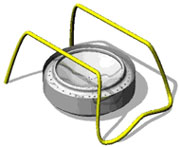
These little stoves are great -- they're fun to make and it only takes a few minutes. Not just a toy -- they really work! They put out a hot ring of blue flame like a gas stove and hold enough fuel for about 15 minutes -- so if you're cooking something that takes longer than that, better make two so you can alternate them to keep up the heat.

All you need is a couple of aluminium soft-drink cans, some perlite, a wire coat-hanger and a bottle of denatured alcohol (spirits, usually dyed purple).

Backpack stove -- full instructions.

Make a Hobo stove with a one-gallon paint can and a pocket knife.

PicoTurbine

This is a great energy project! Make a miniature, 8" (20 cm) high, wind-driven power generator. Midori made one out of a pencil, a wire coat-hanger, a bit of wood, an old CD, some paper and cardboard, four magnets, and some other bits and pieces.

Or you can buy a special kit. "The PicoTurbine can produce 1/3 watt -- that's a lot of power when converted to education!"

PicoTurbine page

Low-tech radio

Listen to AM radio on a crystal radio set you can build yourself for only a few dollars. Crystal radios don't need a power supply -- they're powered by the radio waves they receive!

Crystal radios were discovered in 1901 and are still the basis for most modern-day radio apparatus. For this reason, a study of crystal sets is a great place to start to build a foundation in radio electronics.


You can make a crystal radio out of anything (Xtal Set Society)
Building them was a craze in the 1920s, and again in the 1950s, and now it's happening all over again.
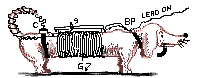
Here's where to start: online resources, plans and instructions for different models you can build -- from a cereal packet, a cigar box, and a computer cable.

Crystal radio page

What to do with a cardboard carton

Which is best?

  1. Throw it in the garbage
  2. Send it to the waste-recyclers
  3. Turn it into a solar box cooker
  4. Use it instead of an oven to bake sweet potatoes
  5. Turn it into a composter that finally composts itself -- and grow a tree in the compost you make
  6. Feed it to compost worms
  7. Make a Growing Column and grow 50 vegetables in it
  8. Hatch 3 dozen eggs in it -- make an incubator.
  9. Make an armchair
  10. Build a house.

There are lots more, this list will keep growing -- can you add to it?

We started another list like this, listing the ways people use empty oil drums, but we soon gave up -- it would be too long!

Why don't you try it? See how many empty oil drums you can spot being used for different purposes in your neighbourhood -- it will help you to open your eyes to recycling opportunities. They're the big, 55-gallon (US) steel drums. They're everywhere, but nobody notices them.

Let us know what you find -- we'll keep count.

What to do with a cardboard carton

Sisters of silk

-- Hong Kong's Chinese amahs


Drawing by Christine Thery
Chinese "amahs" (domestic helpers) first gained their economic independence through the silk boom in the rural areas of Guangdong at the start of this century. When the silk boom ended, they formed sisterhoods, took anti-marriage vows, and devoted themselves to domestic service.

Now there are only a few of them left, and the fascinating history of these women and their unique way of life will soon be lost forever.

A social research and oral history project mainly for Hong Kong schools to help capture a special part of local history before it fades away.

  • oral history
  • civic education
  • social research
  • women's issues
  • using personal and family networks

Other communities have started to use our Sisters of Silk project as a model for similar work in their own societies. The context is quite different, but the model is easily adapted to new tasks.

Is there a part of living history in your community that's fading away, a group of old people whose lives were part of something special that's now past? Don't let their memories die, show them you care. Please contact us, we'll help you if we can.

Sisters of silk -- Hong Kong's Chinese Amahs

Silkworms in a shoebox

-- part of the Sisters of Silk project

Projects:

  • from eggs to caterpillars to silk cocoons to moths to eggs
  • make your own silk
  • nature, ecology, environment
  • resources, teaching materials, equipment, references, history, silk around the world, silk in rural development

Silkworms in a shoebox
Mulberry trees
Kids' crazes

School gardens

Handmade Projects' innovative organic growing system is ideal for schools gardens and as a resource for school biology and environment projects. This system can even be adapted to conditions in Hong Kong schools which don't have school grounds.
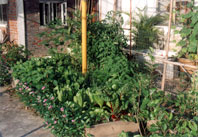

Journey to Forever garden


The garden at our Hong Kong headquarters, the Beach House on Lantau Island, demonstrates that you can build a beautiful organic food garden on top of cement without any soil -- you make your own high-quality soil by recycling food scraps and waste.

Hundreds of great projects, online and in books.

  • how to start a school garden -- indoors or outdoors
  • gardening and waste-recycling (turn kitchen scraps into fertile new soil)
  • composting, vermicomposting -- kids just love this! (See School composting, below)
  • what it takes to grow a meal

All gardening projects integrate well with the rest of the curriculum and enhance studies in a wide range of subjects.

See School gardens page
School gardening resources
Trees and forests -- resources for schools

School composting

Kids love composting and vermicomposting projects! Gardening and composting go hand-in-hand, especially in school garden projects: gardening without composting only teaches half the lesson.

Composting concerns the invisible half of the Wheel of Life, Nature's cycle of growth and decay. This is the vital part that happens underground, where wastes decay to give rise to new life.

The complete lesson from which children can benefit the most includes the full round of growth and decay, how the one depends on the other, and how, together, they compose a vivid example of the health, balance and sustainability of a natural system at work.

Great schools composting resources online.

School composting

Trees and forests

Without trees, we are doomed. Nothing symbolises Mother Nature and how our environment is threatened better than trees and forests, and especially rainforests. Via the Internet, schools and children can get actively involved in saving trees -- and learning in depth exactly why it's so important.

Here are the best resources available:

Trees and forests -- resources for schools

The Beach House fish pond

"Aren't you breeding mosquitoes in that bathtub? Why're you growing water hyacinth? It's a terrible pest." -- Craig Leeson, journalist.

Projects:

  • Make your own garden pond -- a whole ecology in four square feet
  • What are weeds?
  • What are pests?

This project has a lot of depth -- more depth than our fishpond (which has no fish...).

Beach House Fish pond
Garden pond
Aquaculture for small farmers

Handmade Organic Mosquito Repellent (HOMeR)

The Thai lemon grass in our herb garden grows nearly two inches a day -- and we found it keeps the mosquitoes away. We've also found that it's an effective herbal anti-fungal medicine (lemongrass tea) and in Puerto Rico people use the fibrous stalks as a natural toothbrush! But how can its essence be extracted and preserved without losing its magic? We use a tincture we make with Chinese brandy. It works well -- but can you find a better way?

Subjects:

  • Herbs, food and medicines
  • Botany, chemistry
  • Threatened plant resources

"The world's most dangerous animal is the mosquito." -- BBC World Service health program: millions die every year of malaria, and with increasing drug resistance, the problem is worsening, while attempts to control the mosquitoes with pesticides have proved ineffective.

  • three-quarters of modern medical drugs are plant-based
  • most plant species haven't yet been studied for their potential medical benefits
  • thousands of plant species are lost forever each year because of deforestation and industrialized farming methods.

Handmade Organic Mosquito Repellent (HOMeR) page

Eco-footprint

Are you too big for your boots? How heavily do you tread upon the world?

Your ecological footprint is the amount of land it takes to support your way of life, your lifestyle.

The worldwide average per capita footprint is 2.4 hectares, or 6 acres. If we leave only 12% of the biosphere for other species, there are less than 2 hectares available per person, or 5 acres each -- this means that we humans overshoot the mark by at least 20%.

That's a very important number -- it's the measure of just how "unsustainable" we are. This is why environmental issues are so important.

Let's see how you measure up. Includes guidance on how to make your footprint smaller.

Eco-footprint

Schools programs

These are the major international programs for schools and students on the Internet.

Schools and youth programs on the World Wide Web

Schools resources

Search engines, libraries, resources, thousands of schools projects, games, communications -- for teachers, for students and for kids.

Educational resources for teachers, students and parents

Global Warming

Subhankar Banerjee/Associated Press

On Feb. 2, 2007, the United Nations scientific panel studying climate change declared that the evidence of a warming trend is "unequivocal," and that human activity has "very likely" been the driving force in that change over the last 50 years. The last report by the group, the Intergovernmental Panel on Climate Change, in 2001, had found that humanity had "likely" played a role.

The addition of that single word "very" did more than reflect mounting scientific evidence that the release of carbon dioxide and other heat-trapping gases from smokestacks, tailpipes and burning forests has played a central role in raising the average surface temperature of the earth by more than 1 degree Fahrenheit since 1900. It also added new momentum to a debate that now seems centered less over whether humans are warming the planet, but instead over what to do about it. In recent months, business groups have banded together to make unprecedented calls for federal regulation of greenhouse gases. The subject had a red-carpet moment when former Vice President Al Gore's documentary, "An Inconvenient Truth," was awarded an Oscar; and the Supreme Court made its first global warming-related decision, ruling 5 to 4 that the Environmental Protection Agency had not justified its position that it was not authorized to regulate carbon dioxide.

The greenhouse effect has been part of the earth's workings since its earliest days. Gases like carbon dioxide and methane allow sunlight to reach the earth, but prevent some of the resulting heat from radiating back out into space. Without the greenhouse effect, the planet would never have warmed enough to allow life to form. But as ever larger amounts of carbon dioxide have been released along with the development of industrial economies, the atmosphere has grown warmer at an accelerating rate: Since 1970, temperatures have gone up at nearly three times the average for the 20th century.

The latest report from the climate panel predicted that the global climate is likely to rise between 3.5 and 8 degrees Fahrenheit if the carbon dioxide concentration in the atmosphere reaches twice the level of 1750. By 2100, sea levels are likely to rise between 7 to 23 inches, it said, and the changes now underway will continue for centuries to come.


Thursday, April 23, 2009

Hazardous Waste Management


The Environmental Health and Safety Center (EH&S) has implemented a comprehensive program for the management of hazardous materials from University operations. The EH&S manages the hazardous material disposal program and provides oversight. Each generator of a hazardous material should consider the hazards of the chemicals and gases they use, utilize the least hazardous material practicable, and consider strategies to minimize or eliminate hazardous waste streams.

Hazardous materials are defined as components used in a dangerous process. Those materials or components and its byproduct become a hazardous waste when it is removed from the process and intended for discarding or is determined to no longer be of use.

For NC State purposes, the term “hazardous materials” is intended to cover hazardous waste, low-level radioactive waste (LLRW), regulated and non-regulated biomedical waste, mixed waste (waste containing both chemicals and LLRW) and other waste that may require special disposal or handling procedures. For comprehensive Hazardous Waste program information, please consult the NC State Hazardous Waste Generators Manual

Hazardous Waste Education and Information

Hazardous Waste management at NC State adheres to a myriad of regulatory guidelines as well as prudent waste practices. Specific waste management practices are developed to minimize waste streams and reduce all environmental impacts to our campus and local community.
To further explain Hazardous waste practices at NC State, Environmental Health and Safety maintains the following educational tools: hazardous waste program video and Power Point Presentation.

To bolster compliance in laboratory, storage or hazardous material use locations, informational posters on radioactive waste, biological/medical waste, and chemical waste are available for download. These files are available in PDF format, used with Adobe Acrobat. These quick reference tools should be conspicuously posted in hazardous material use areas and/or hazardous waste storage venues.


LINK TO VIDEO POWER POINT

Waste Collection Information

Environmental Health and Safety provides a single collection service for chemical, radioactive, mixed (radioactive hazardous), and biological waste programs. Our goal is to ensure compliance with EPA, DOT, and NRC regulations while providing convenient and responsive service to the hundreds of University labs, shops, and storage facilities that generate wastes.
Final disposition of waste is the responsibility of the generator and is based on the waste stream and its University oversight department.


Surplus

Materials Support

http://www7.acs.ncsu.edu/materialsmgmt/
515-7238

  • Equipment and Furniture
  • Electronics and Computers
  • State-Owned Vehicles
  • Appliances
  • Equipment
  • Gas Cylinder Returns

Hazardous Waste

Environmental Health & Safety

www.ncsu.edu/ehs
515-6863, 515-6864

  • Chemical & Radioactive Waste
  • Paint and Maintenance Waste
  • Medical and Research Waste
  • Animal and Biological Waste
  • Fluorescent Lamps
  • Sharps and Lab Glass

Recycle

Waste Reduction and Recycling
www.ncsu.edu/facilities/recycling
515-9421
  • Common Recyclables
  • White Goods
  • Scrap Metal
  • Electronic Waste
  • Lead Acid Batteries

Non-Hazardous Waste

Waste Reduction and Recycling
www.ncsu.edu/facilities/recycling
515-9421
  • Construction & Demolition Debris
  • Autoclave Waste
  • Municipal Solid Waste
  • Yard Waste


Solid Waste Management and University Recycling Guidance

NC State University has established procedures and requirements for acceptance of waste and recyclable materials. To ensure better waste management practices, the following guidelines must be followed:


Hazardous Waste Form Submittals

  • Radioactive, chemical, and biological wastes are filed on a single disposal form in HazTrak (online database).
  • Waste materials for disposal through EH&S need to be identified using the waste identification form available on-line.
  • One form must be completed for each container. Each form requires identification of all chemical constituents including water, and approximate percentages, with no abbreviations or chemical formulas. Trade names may be used, but should also identify main ingredients.
  • Waste Accumulation - Complete waste forms as soon as containers are determined to be "full" or otherwise ready for disposal. This is especially important for persons using radioactive materials (inventory limits) or relatively large volumes of solvents (fire hazard and volumes of flammable liquids).

Waste Submission instructionsHazTrak Tutorial (waste submission form)

The EHS Hazardous Waste online database management tool has many features to capture necessary material data. This tutorial snapshots how to access and use the online tool with screen-by-screen guidance and information.

Collection Schedules

Our goal is to minimize hazards posed by wastes in the work area while striking a balance between timely collection and frequency of visits to the same buildings. To achieve this, we will attempt to collect wastes within seven days, and for large quantities within three days of submittal.
Schedules are based on forms submitted before 3 p.m. each workday. Daily schedules are flexible, and will allow for collection from adjacent buildings based on need.

Tuesday

Centennial Campus

Wednesday

Method Road
Dearstyne area
Pylon Labs
College of Veterinary Medicine

Thursday & Friday

Main Campus

Biological Wastes and Animal Tissues

Biological, microbiological, and related wastes, that have been autoclaved, should be placed in the red bio-hazardous waste containers, which are located in the vicinity of the larger solid waste (trash) dumpsters at buildings containing autoclaves. These containers are clearly labeled for this purpose. Orange biohazard bags are no longer used at NC State. Labeled/marked biohazard bags cannot be placed in regular dumpsters or trash receptacles, even if disinfected. If material cannot be decontaminated, place it in a biohazard bag for incineration.

Dead animals and animal tissues cannot be placed in the campus solid waste (trash) dumpsters. The single container for these wastes is located at the Centennial Biomedical Campus (CBC). For those at CBC, access to these containers should be coordinated with Steve O’Connell at 513-6625.

Dead animals and animal tissues originating at non-CBC campus locations need to be transported to the CBC for proper disposal. Complete a chemical waste form on-line for each container. EH&S will pick up on a separate schedule.

If tissue is held in a liquid preservative, the tissue and liquid should be separated. Animal tissue can be disposed of by rendering (large animal parts) or by placing it in a biological waste bag for incineration. Liquid preservative usually needs to be disposed of as a hazardous waste and cannot be disposed via sanitary sewer systems.
Refer to NC State Biological Safety Manual for additional resources

Radioactive Wastes


The proper termination of projects and disposal of radioactive materials and radiation producing devices is an integral part of the University's Radiation Safety Program. Project termination and waste disposal procedure include:

  • Accounting for all materials and devices approved for the project;
  • The performance of radiological surveillance to insure that the laboratory or place-of use is free of any radioactive contamination;
  • The removal of any radioactive contamination;
  • The removal of all radioactive wastes;
  • The deposting and delisting of laboratories and places-of-use; and
  • The documentation of the termination activities.

The Radiation Safety Office has established procedures and documentation checklists for the performance of waste disposal and termination activities. The Principal Investigator should notify Radiation Safety of the radiation project termination as far in advance as possible, but not less than 30 days prior to termination.

Transfer of radioactive material and/or radiation producing devices may take place only to another approved project and then only upon approval of the Radiation Safety Office and/or the Radiation Safety Committee.

Radioactive animal carcasses and other radioactive biological wastes should be disposed of through EH&S. Complete a chemical waste form on-line for each container and EH&S will pick up the waste on a separate schedule.
Refer to NC State Radiation Safety Manual for additional resources


Chemical Disposal


Assure all waste containers are labeled as hazardous waste, with the full name of the chemical. All containers must also be securely closed, and filled with at least 10% headspace to allow for thermal expansion. Hazardous materials must not be disposed via sanitary sewers or trashed; waste must be collected for disposal in accordance with local, federal, and University guidelines.

When ceasing laboratory operations:

  • Check refrigerators, freezers, fume hoods, bench tops as well as storage cabinets for chemical containers
  • Empty all beakers, flasks, evaporating dishes
  • Determine which chemicals are usable and transfer responsibility for these materials
  • All hazardous material users are responsible for maintaining a current safety plan


Controlled Substances

Controlled substance permits are issued by the U.S. Drug Enforcement Agency (DEA) and are issued to individual researchers. There is no central record of permit holders. Abandonment of a controlled substance is a violation of DEA regulations by the permittee. Permission to transfer ownership of a controlled substance to another individual must be received from DEA. If controlled substances for which the licensee is unknown are found, contact EH&S. Notify the Department Head of any disposition of controlled substances. There is no easy legal method to dispose of a controlled substance unless the permit is available. Information on the permit is required for regulatory reporting.

Compressed Gas Cylinders

When returning compressed gas cylinders to the vendor, remove the gas connections, replace cylinder caps, and return cylinders to suppliers by calling NC State Central Stores 515-2197. Lecture bottles are generally not returnable to the vendor and may need to be disposed of as hazardous waste through EH&S. It is recommended that lecture bottles not be used because of high disposal costs that may be charged back to the waste generator.

Hazardous Waste Inspections

Environmental Health and Safety performs hazardous waste inspections twice a calendar year of all areas that possess, store and/or use any hazardous materials. During each inspection, specific items are reviewed:

  • Generator Control and Area Security
  • Container selection, secondary containment
  • Correct and complete labeling/markings
  • Clean containers (spill minimization and clean up)
  • Proper filling and closing of containers
  • Quantity control and limitation
  • Orderly work area and clear isle space (36” minimum)

Detailed explanation of each category and corrective action examples are provided as additional guidance in HAZARDOUS WASTE INSPECTION GUIDANCE

Cost Allocation

It is University practice that routine waste removal and disposal charges will be paid by the University and/or college through indirect cost recovery. Routine waste removal and disposal includes chemical wastes, radioactive wastes, and mixed wastes. Large lab cleanouts will be handled as a routine waste stream when waste forms are submitted electronically and disposal can be managed as part of a regular waste pick-up schedule. A fiscal report listing waste generation and costs for each college and department is provided to University Administration as a basis for cost recovery.

Specific costs for “non-routine” services, including all contractor costs, will be billed to the department or college that generates the waste through IDTs immediately upon billing from vendors, or incorporated in fiscal year cost reports. “Non-routine” services may include material collection from sites outside of Wake County, testing of unknowns, stabilization of chemicals/wastes, and spill response services by contractors. Large laboratory or stockroom cleanouts that require contractors or EH&S personnel to complete inventories, or to enter forms into the University chemical waste management system, or hazardous waste streams that require time critical disposal, are non-routine waste and will be billed through IDTs or fiscal reports. All costs including contract labor will be recovered.

Additional Information

EQUIPMENT DECONTAMINATION - If laboratory equipment is to be left for the next occupant, clean or decontaminate it before departing the laboratory. If equipment is to be sold or given away, it must be decontaminated by the user. If exhaust or filtration equipment has been used with extremely hazardous substances or organisms, please contact EH&S. EHSC can also collect miscellaneous articles, equipment, and debris not suitable for disposal through the campus solid waste program (trash).

If laboratory operations cease and equipment is to be discarded, be aware that capacitors, transformers, mercury switches, mercury thermometers, radioactive sources and chemicals must be removed before disposal.

SHARED STORAGE AREAS - One of the most problematic situations is the sharing of storage units such as refrigerators, freezers, cold rooms, stock rooms, waste collection areas etc., particularly if no one has been assigned to manage the unit. Departing researchers must carefully survey any shared facility in order to locate and appropriately dispose of their hazardous materials.

SHARPS - Used sharps should be placed in a sturdy, puncture-resistant, package. Complete a chemical waste disposal form on-line in HazTrak for each container.

Resources and Weblinks

The RCRA regulations are contained in Title 40 of the Code of Federal Regulations (CFR) Parts 239 through 299. The CFR is a collection of all federal regulations codified and enforced by all federal agencies. Title 40 – Protection of the Environment contains all of the regulations governing EPA's programs.
RCRA (EPA) regulations - http://www.epa.gov/osw/laws-reg.htm#regs

Chemicals Listed as Hazardous Waste
Radiation Safety waste management guidelines
Biological waste management guidelines

Wastewater Treatment Technology Tutorial

Introduction

Earthpace has developed this tutorial to guide users through the wastewater treatment process and to introduce users to current and emerging technologies for wastewater management.

Begin the tutorial by reading the introduction or by clicking on one of the blue titles in the image below to learn more about each wastewater treatment method. You may also use the links to the right to navigate.

wastewater treatment diagram

Wastewater treatment refers to the process of removing pollutants from water previously employed for industrial, agricultural, or municipal uses. The techniques used to remove the pollutants present in wastewater can be broken into biological, chemical, physical, and energetic. These different techniques are applied through the many stages of wastewater treatment.

Primary treatment usually includes the removal of large solids from the wastewater via physical settling or filtration. The first step in primary treatment is screening.

Secondary treatment typically removes the smaller solids and particles remaining in the wastewater through fine filtration aided by the use of membranes or through the use of microbes, which utilize organics as an energy source. Energetic techniques may also be employed in tandem with biological techniques in the secondary phase to break up the size of particles thus increasing their surface area and rate of consumption by the microbes present. A common first step in the secondary treatment process is to send the waste to an aeration tank.

Tertiary treatment involves the disinfection of the wastewater through chemical or energetic means. Increasing the number of steps in a wastewater treatment process may insure higher quality of effluent; however employing additional technologies may incur increased costs of construction, operation, and maintenance.

Solid Waste Management (Maintenance and Improvement of the Landfill Site)

Contents:

  • 1.The Roll of Landfill Site
    • 1) Purpose of landfill site
    • 2) Classification of landfill site
    • 3) Classification of landfill structure
    • 4) Structure of semi-aerobic landfill
    • 5) Facilities of a typical sanitary landfill site
  • 2.Prevention of Secondary Pollution
    • 1) The existing state and future of the landfill site
    • 2) Secondary pollution from landfill site
      • (a) Water contamination
      • (b) Gas generation
      • (c) Offensive odor
      • (d) Pests and vectors
      • (e) Noise and vibration
      • (f) Fire
    • 3) Prevention of secondary pollution by applying cover soil
    • 4) Effectiveness of cover soil method
      • (a) Prevention of scattering the garbage
      • (b) Prevention of offensive odor
      • (c) Getting rid of pests and vectors
      • (d) Prevention of fire and its spreading
      • (e) Make scenery beauty
      • (f) Decreasing leachate amount
  • 3. Management and operation of landfill site
      • (a) Waste analysis
      • (b) Sanitary landfill
      • (c) Environmental preservation countermeasure
      • (d) Landfill record
      • (e) Management of the post landfill site
  • 4.Utilization plan of the post landfill site

Environmental Pollution Control Center, Osaka Prefecture
Address: 1-3-62 Nakamichi, Higashinari-ku, Osaka 537-0025, Japan
Telephone: +(81)-6-6972-1321 Facsimile: +(81)-6-6972-7665
E-mail: webmaster@mbox.epcc.pref.osaka.jp

We can accept inquiries only in English and Japanese.
Copyright(C) Environmental Pollution Control Center, Osaka Prefecture
All rights reserved.

Tuesday, April 21, 2009

Carbon Dioxide Transformed Into Methanol

ScienceDaily (Apr. 17, 2009) — Scientists at Singapore's Institute of Bioengineering and Nanotechnology (IBN) have succeeded in unlocking the potential of carbon dioxide – a common greenhouse gas – by converting it into a more useful product.

In the international chemistry journal Angewandte Chemie, the IBN researchers report that by using organocatalysts, they activated carbon dioxide in a mild and non-toxic process to produce methanol, a widely used industrial feedstock and clean-burning biofuel.

Organocatalysts are catalysts that are comprised of non-metallic elements found in organic compounds. NHCs such as IMes (1,3-bis-(2,4,6 trimethylphenyl)imidazolylidene) are a form of organocatalysts that are stable and easily stored. They do not contain toxic heavy metals and can be produced easily without high costs.

The scientists made carbon dioxide react by using N-heterocyclic carbenes (NHCs), a novel organocatalyst. In contrast to heavy metal catalysts that contain toxic and unstable components, NHCs are stable, even in the presence of oxygen. Hence, the reaction with NHCs and carbon dioxide can take place under mild conditions in dry air.

The IBN scientists showed that only a small amount of NHC is required to induce carbon dioxide activity in a reaction. "NHCs have shown tremendous potential for activating and fixing carbon dioxide. Our work can contribute towards transforming excess carbon dioxide in the environment into useful products such as methanol," said Siti Nurhanna Riduan, IBN Senior Lab Officer, who is also pursuing her Ph.D. under the Scientific Staff Development Award at IBN, one of the research institutes of Singapore's A*STAR (Agency for Science, Technology and Research).

Hydrosilane, a combination of silica and hydrogen, is added to the NHC-activated carbon dioxide, and the product of this reaction is transformed into methanol by adding water through hydrolysis.

Yugen Zhang, Ph.D., IBN Team Leader and Principal Research Scientist, explained, "Hydrosilane provides hydrogen, which bonds with carbon dioxide in a reduction reaction. This carbon dioxide reduction is efficiently catalyzed by NHCs even at room temperature. Methanol can be easily obtained from the product of the carbon dioxide reaction. Our previous research on NHCs has demonstrated their multiple applications as powerful antioxidants to fight degenerative diseases, and as effective catalysts to transform sugars into an alternative energy source. We have now shown that NHCs can also be applied successfully to the conversion of carbon dioxide into methanol, helping to unleash the potential of this highly abundant gas."

Previous attempts to reduce carbon dioxide to more useful products have required more energy input and a much longer reaction time. They also require transition metal catalysts, which are both unstable in oxygen and expensive. Ongoing research at IBN aims to find cheap alternatives for the hydrosilane reagent so that the production of methanol can be even more cost-effective for mass industrial production.

"At IBN, we are innovating effective methods of generating clean energy using green chemistry and nanotechnology. In the face of environmental pollution, global warming and increasing demands on diminishing fossil fuel resources, we hope to provide a viable alternative energy option for industry, and effective sequestration and conversion of carbon dioxide," said IBN Executive Director. Jackie Y. Ying, Ph.D.